- Programmer Weekly
- Posts
- Programmer Weekly (Issue 296 Apr 16 2026)
Programmer Weekly (Issue 296 Apr 16 2026)

Rahul Chaudhary
April 16, 2026
In partnership with

Welcome to issue 296 of Programmer Weekly. Let's get straight to the links this week.
Fast browsing. Faster thinking.
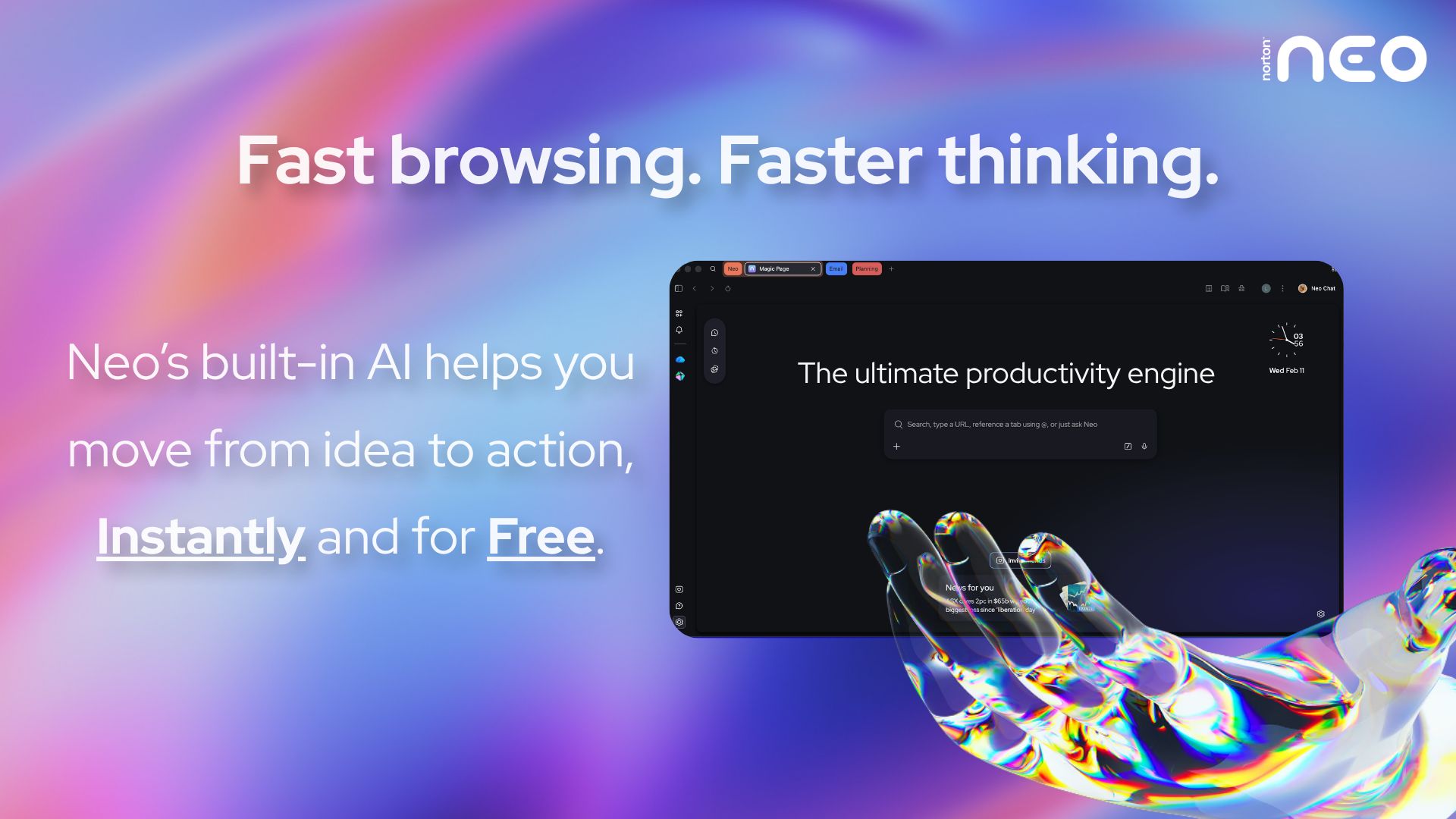
Your browser gets you to a page. Norton Neo gets you to the answer. The first safe AI-native browser built by Norton moves with you from idea to action without slowing you down. Magic Box understands your intent before you finish typing. AI that works inside your flow, not beside it. No prompting. No copy-pasting. No switching apps.
Built-in AI, instantly and for free. Privacy handled by Norton. Built-in VPN and ad blocking protect you by default. No configuration. No extra apps. Nothing to think about.
Fast. Safe. Intelligent. That's Neo.
Quote of the Week
"Don't automate an undisciplined workflow. The computer won't solve what management can't." - Larry Bernstein
Reading List
It’s a guide to storing SSH keys in your computer’s TPM so the private key stays hardware-bound instead of living as a plain file on disk. The post walks through creating a TPM-backed token, importing or generating keys, and then using them with TPM provider to authenticate with a PIN.
Codex, given a browser shell foothold on a Samsung Smart TV plus matching firmware source, autonomously escalated to root access. It exploited world-writable /dev/ntksys kernel driver flaws for physical memory mapping, audited Novatek code, and chained primitives to zero browser credentials, highlighting AI's hardware pentesting potential.
The post covers advanced PostgreSQL indexing techniques like functional, partial, and covering indexes that go beyond basic single/composite indexes. It's aimed at software engineers who want to optimize database performance without being database experts.
An article about re-deriving floating-point arithmetic from first principles, then using that understanding to design a custom bfloat16 FPU for an ASIC matrix-multiplication accelerator. The project focuses on simplifying the format and hardware for speed and area, while the author documents the tradeoffs, verification issues, and tapeout journey.
What if I told you SQL could play chess? No JavaScript, no frameworks - just pure SQL rendering a full chess board in your browser.
The article shows that contiguous memory access benefits plateau early, with ~128 KB to 1 MB blocks often enough to reach near-peak performance depending on workload and hardware. It further demonstrates that required locality decreases as compute per element increases, challenging the need for large linear memory layouts in many systems.
67,000 lines of Rust, two years, and the non-obvious problems of making Node.js and Rust work together in the same process.
Offload is a Rust CLI that runs your test suite remotely across isolated cloud sandboxes, preventing agents from being bottlenecked by slow local execution. The core idea is to accelerate the coding loop through parallelization, environment caching, and reduced flakiness instead of scaling local compute.
Stripe's Selective Test Execution system employs some clever tricks to allow us to continue scaling our team and our codebase while only running around 5% of our tests on average. Find out how it works!
Dead tuples from high-churn job queues can silently degrade your Postgres database when vacuum falls behind, especially alongside competing workloads. Traffic Control keeps cleanup on track.
The post explains how Yelp turned a prototype “Biz Ask Anything” assistant into a production system by hardening the data pipeline, retrieval, serving, and evaluation layers. Its main point is that moving from demo to product requires more than a good model: you need fresh data, grounded answers, and safety/reliability guardrails at scale.
A basic introduction to USB for people that don't need to know what happens on the wire.
Five git commands that tell you where a codebase hurts before you open a single file. Churn hotspots, bus factor, bug clusters, and crisis patterns.
Watch, Listen
The video is a conversation with DHH about how his software-building workflow has changed in the last six months, especially his shift to an agent-first approach where he barely writes code by hand. It focuses on how he uses AI agents for exploring ideas and building software, while still keeping the same standards for quality and craft.
Learn how to use Codex to accelerate real-world coding workflows and developer productivity.
Netflix relies on Java and Spring Boot for its massive microservices ecosystem, transitioning to Generational ZGC to eliminate garbage collection pause times and significantly reduce IPC timeout errors. The company is now automating large-scale version migrations using AI-driven agentic workflows and adopting Spring AI to integrate generative AI capabilities directly into its backend services.
Interesting Projects, Tools and Libraries
The open-source managed agents platform. Turn coding agents into real teammates - assign tasks, track progress, compound skills.
Siri Shortcuts Programming Language.
A little language inspired by Rust that compiles to Go.
A collection of DESIGN.md files inspired by popular brand design systems. Drop one into your project and let coding agents generate a matching UI.
Library for reducing tail latency in RAM reads.
Deploy any Agent Skill as an API via POST /run. Multi-model, stateful, open source.
Open source, cloud native, Postgres platform with copy-on-write branching and scale-to-zero.
Python Weekly - A free weekly newsletter featuring the best hand curated news, articles, tools and libraries, new releases, jobs etc related to Python.
Founder Weekly - A free weekly newsletter for entrepreneurs featuring best curated content, must read articles, how to guides, tips and tricks, resources, events and more.